Now Reading: New Chocolate Lab In Tobago Sets the Stage for Culinary Tourism
-
01
New Chocolate Lab In Tobago Sets the Stage for Culinary Tourism


By Klysha Best
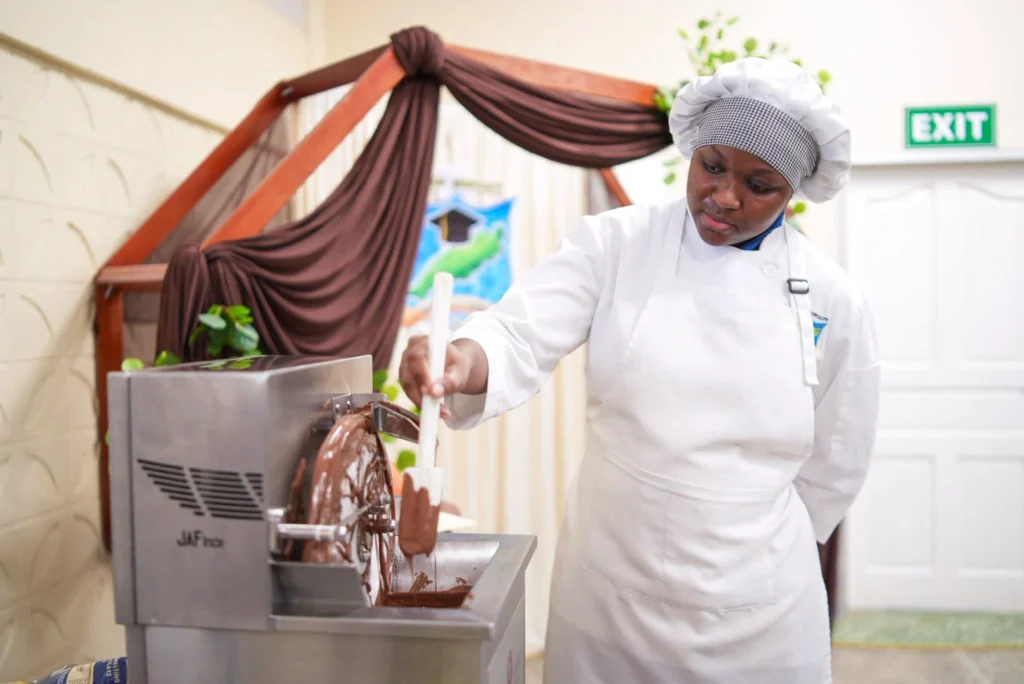
The Tobago Hospitality and Tourism Institute has partnered with Trinitario to transform local cocoa into world-class chocolate and invites the world to taste it.
Trinidad and Tobago’s lush hills have long nurtured some of the world’s finest cocoa. Now, that heritage is getting a bold new chapter.
The Tobago Hospitality and Tourism Institute (THIT), through its Mt St George School, has signed a Memorandum of Understanding with the Trinidad and Tobago Fine Cocoa Company (Trinitario) to launch a dedicated chocolate lab, a space where students will craft local Trinitario beans into premium chocolate delights.
For visitors, it’s more than a story of education. It’s an invitation to taste an island reinventing itself.
The new lab is designed to foster creativity, technical skill, and entrepreneurial spirit.
Education Secretary Orlando Kerr hailed the initiative as a model of economic diversification.
“There is value in growing cocoa,” he said, “but there is greater value in processing it, transforming it into chocolate, developing recipes and premium products, incorporating those products into hotels and restaurants, and creating business and export opportunities.”
That vision places Tobago squarely on the map for culinary tourism.
Imagine touring a working chocolate lab, watching students temper and mould fresh chocolate, and sampling bars infused with local fruits, mango, guava, passion fruit, tamarind, each one a taste of the island’s terroir.
The island’s Health Secretary, Dr Faith Brebnor urged students to experiment with local fruits, noting that the island’s abundance is often overlooked.
“Sometimes we live among valuable things so long that we stop seeing the value in them,” she said. “All the fruits that are wasting, the ones you complain you have to clean up from the back of your house, let us not forget that it may be the single ingredient that makes our chocolate more valuable.”
She also pointed to the tradition of “dancing the cocoa,” a cultural practice that could complement a thriving chocolate industry and draw curious travellers. For visitors, this fusion of agriculture, craft, and culture offers an immersive experience unlike any other.
The initiative has attracted global support, with European Union Ambassador Cecile Tassin affirming the EU’s commitment to developing the Caribbean cocoa industry, citing past support for the Cocoa Research Unit at UWI, the Caribbean Fine Cocoa Forum, and exchanges with chocolatiers in Grenada and Belgium. “I hope this facility will inspire young Trinbagonians to see the possibility that exists in their own communities to become chefs, chocolatiers, entrepreneurs, innovators and exporters,” she said.
UK envoy Jon Dean noted that Trinidad and Tobago’s cocoa beans helped establish Britain’s chocolate industry and set the standard for companies like Cadbury.
“Today, as demand grows for premium chocolate, Trinidad and Tobago is exceptionally well placed to build on that legacy,” he said, adding that the UK High Commission will support skills development and trade linkages.
For travellers seeking authentic, off-the-beaten-path experiences, Tobago’s chocolate lab represents a fresh draw. It’s a chance to see cocoa transformed before your eyes, to meet the next generation of chocolatiers, and to taste a piece of the island’s soul. As the lab grows, it could spawn tours, tastings, workshops, and partnerships with local hotels and restaurants, turning Tobago into a must-visit destination for chocolate lovers.
The island has always been a place of natural beauty and warm hospitality. Now, it’s adding a sweet new layer to its story, one that visitors will want to savour.
Related Posts


Stay Informed With the Latest & Most Important News
Previous Post
Next Post